Late Spring • Beltane Season
We have crossed the threshold of May Day and entered the lush, quickening pulse of late spring. Here in Missoula, the hillsides are glowing gold with balsamroot, the hawthorn hedges are beginning to bloom, and the arnica flowers are ready to open any day now. The earth feels awake in a fuller way now — less tentative than early spring, more confident in its unfolding.
The Celtic festival of Beltane is celebrated on May 1st, but to me it never feels like just one day of celebration. More like a point in the Wheel of the Year where we transition, into noticing the distinguishing features of the season itself. What’s beginning to bloom right now? Who is returning? How does the sun hit the living room wall when you open the curtains in the morning? Beltane is one of the “fire festivals,” it marks the halfway point between the Spring Equinox and the Summer Solstice. It has long been associated with fertility, vitality, creativity, sensuality, and the flowering of life itself. This season asks us not only to witness beauty, but to participate in it. To step outdoors. To feel warmth returning to the skin. To remember that growth is not always forceful — often it arrives through steady nourishment, attention, and trust.
The season of spring corresponds to the follicular phase of the menstrual cycle: the time after bleeding, when energy begins to rise again, clarity returns, and the body prepares for ovulation. Estrogen increases, creativity often expands, and many people notice a renewed desire for movement, connection, planning, and expression.
This is not the fiery peak of summer yet. It is the greening. The becoming.
The follicular phase begins after menstruation and continues until ovulation. Energetically, it often carries qualities of emergence and renewal.
Common themes of this phase may include:
Increased motivation and mental clarity
Desire for social connection
Curiosity and creativity
Greater physical energy
Openness to new ideas and possibilities
This can be a beautiful time to work with herbs that are nourishing, uplifting, mineral-rich, and gently circulatory.
Supportive herbs for the follicular phase may include:
Nettle for nourishment and mineral support
Tulsi (Holy Basil)for calming adrenal support, focus and blood sugar balance
Hawthorn as a heart tonic — emotionally and physically
Oatstraw for nervous system steadiness and mineral replenishment
Rather than pushing productivity, this season invites aligned growth. The body often responds best to support that feels spacious rather than demanding. It’s still important to rest and replenish in the follicuar phase. Choose iron rich herbs and foods in order to rebuild blood after menstruation. You will feel your energy increasing in this phase, so aim to stay sustained and keep your blood sugar balanced. Choose meals that are balanced in carbs, fat and protein and don’t skip meals!
Montana Field Notes
Balsamroot in Bloom
The arrowleaf balsamroot has arrived in full golden abundance across open hillsides and grasslands. These sunflower-like blooms seem to capture sunlight itself, reminding us of resilience and rooted vitality. Bio-regional herbalists here in Montana like to use these starchy and resinous roots as support or the respiratory tract as well as the immune system. Some teachers have described balsamroot as having the combined affects of osha and echinacea. The root is best prepared as a tincture or in a syrup.
Balsamroot has a long history of traditional use among Indigenous peoples of the West for both food and medicine. Wherever this beautiful sunflower family plant grows, it is used by the traditional people of the land, the stewards of the land. Balsamroot is still used today by the Okanagan-Colville (syilx), Nez Perce (Nimiipuu), Salish, Kootenai, Pend d'Oreilles, Thompson (Nlaka'pamux), Secwépemc (Shuswap), Paiute, Klamath, Gosiute, Miwok, and Atsugewi tribes.
As always, wild plants deserve respectful observation and ethical harvesting practices.
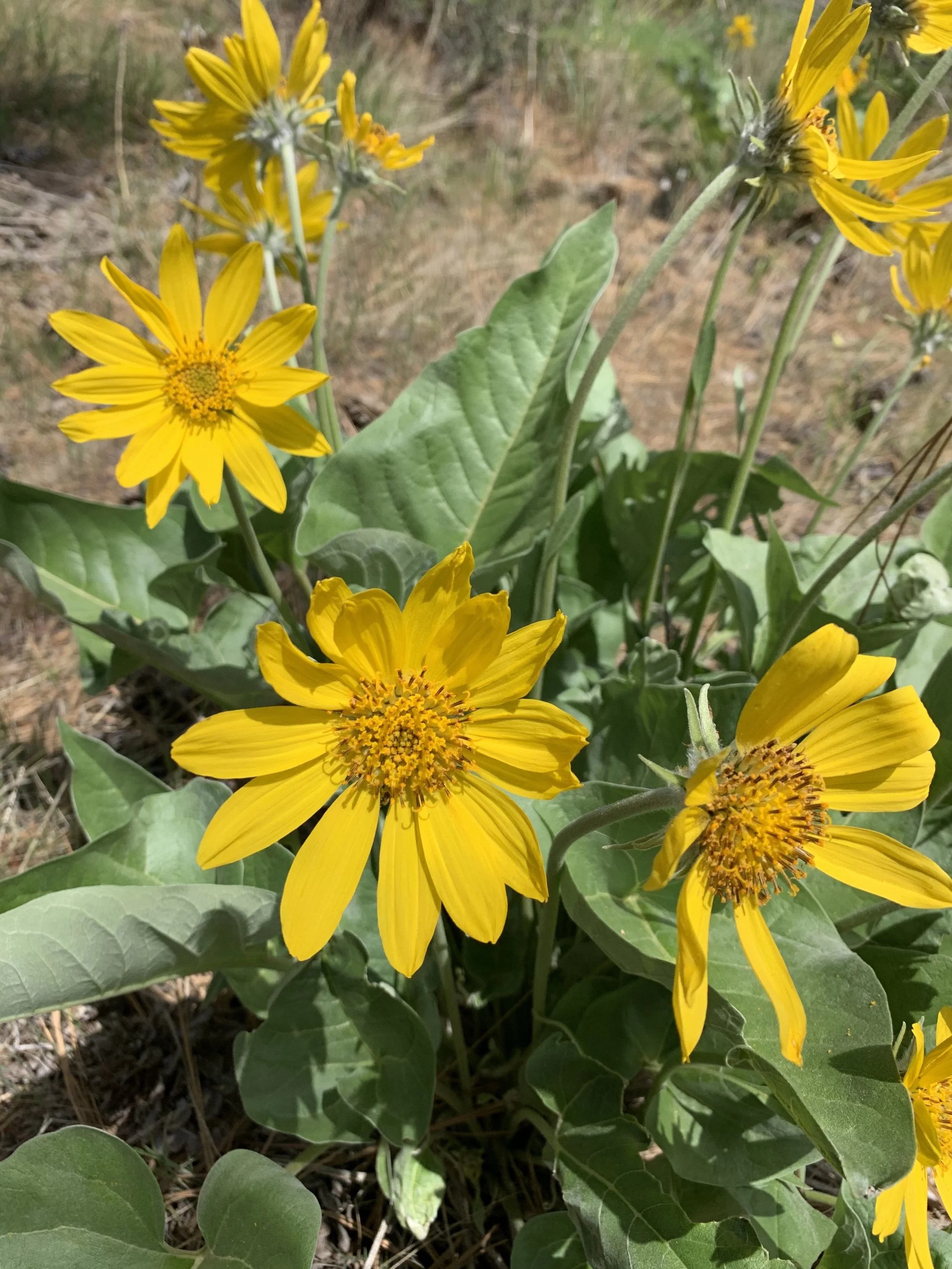
Arrowleaf Balsamroot (Balsamorhiza sagittata)
Hawthorn Blossoms Emerging
The hawthorn are just beginning to flower — one of the most beloved moments in the herbal calendar.
Hawthorn has long been associated with the heart, boundaries, protection, and tenderness. The blossoms carry a sweetness that feels distinctly transitional: spring moving toward summer.
Many herbalists work with hawthorn leaf, flower, and berry as a deeply supportive ally for emotional grounding as well as an all-around cardiovascular tonic.
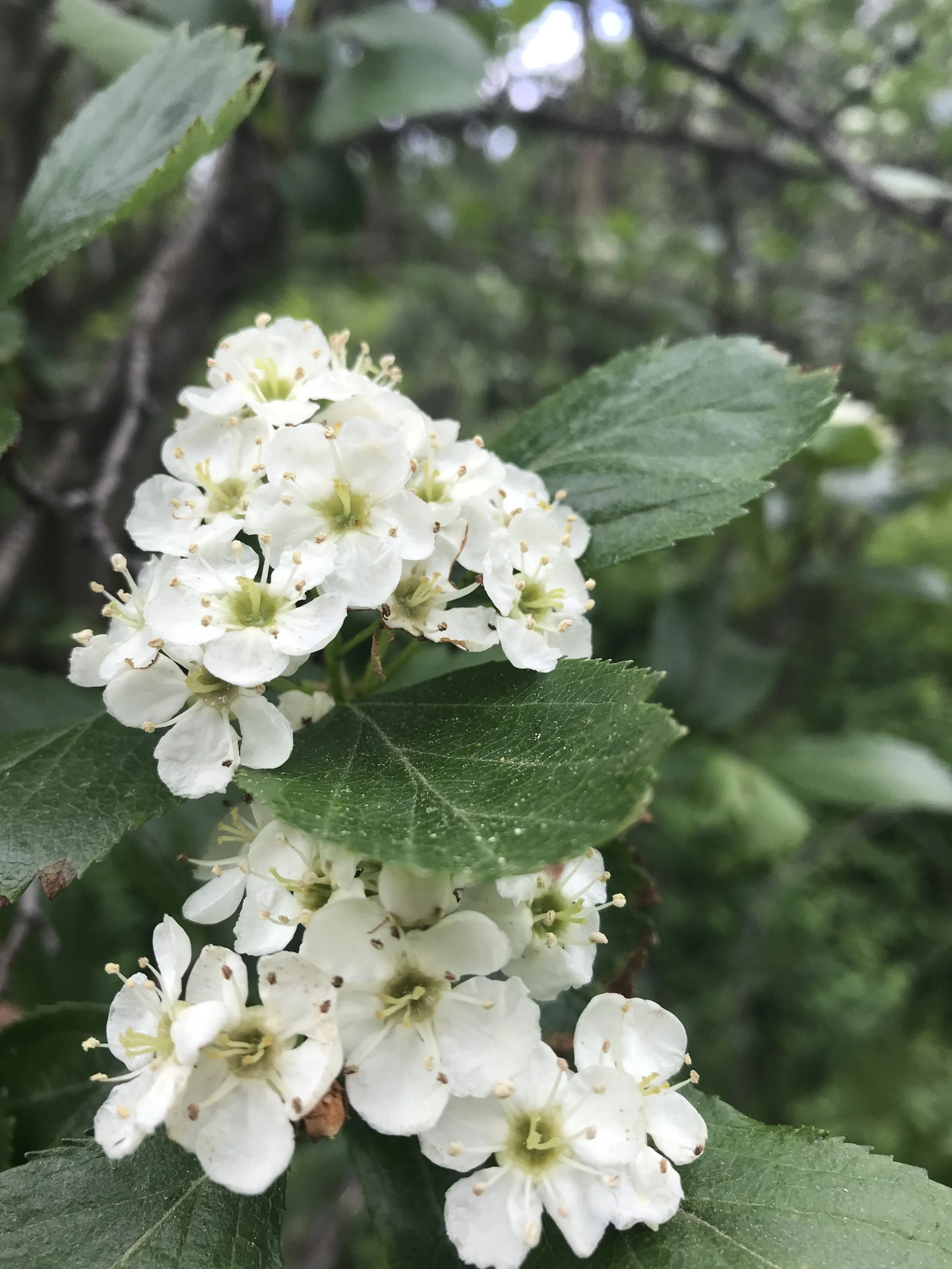
Black Hawthorn (Crataegus douglasii)
Arnica on the Verge
The arnica flowers are nearly ready to open. Their bright yellow blooms often appear just as late spring gathers momentum.
Traditionally used externally in oils and salves, arnica is a classic herb for bruising and muscular soreness. Fresh arnica should not be used internally, and wild populations should always be harvested with care and good ethics. We are very lucky to have arnica in abundance in this part of Western Montana, but we should always approach wild stands with respect and reverence.
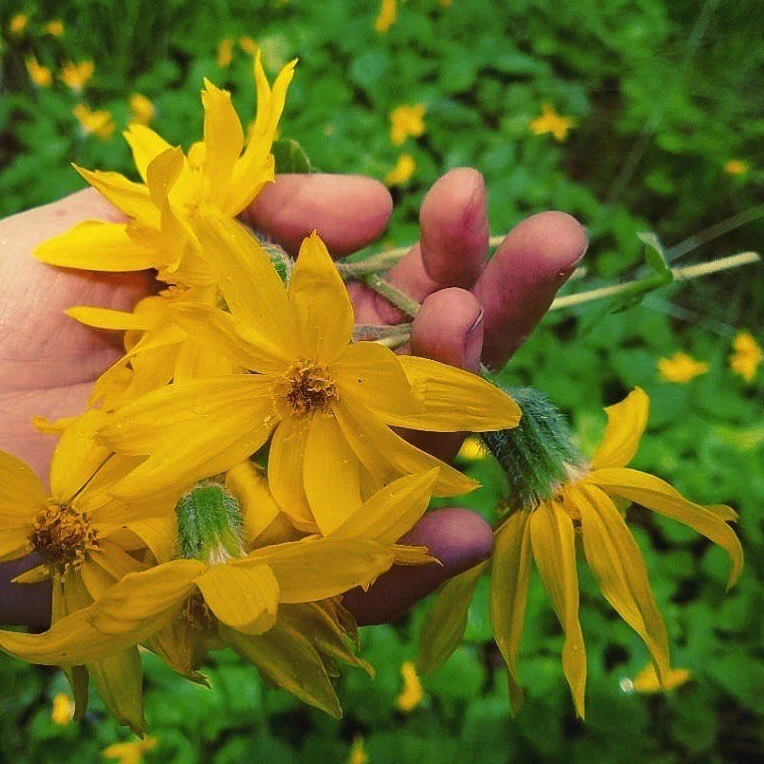
Arnica flowers (Arnica cordifolia)
Herb Spotlight: Hawthorn
There is perhaps no herb that captures this season more fully than hawthorn.
Both protective and softening, hawthorn reminds us that strong hearts are not hardened ones.
Traditional Herbal Uses
Emotional support during periods of grief or transition
Cardiovascular support
Grounding during stress and overstimulation
Ritual and energetic protection in folk traditions
Simple Hawthorn Tea
Ingredients
1 tablespoon hawthorn leaf and flower
1 cup hot water
Steep for 15–20 minutes.
Optional additions:
Rose petals
Linden flower
A spoonful of local honey
Drink slowly, preferably outdoors.
Seasonal Tea Blend for Late Spring
A blend for clarity, circulation, and gentle expansion.
Beltane Garden Tea
2 parts nettle
1 part hawthorn leaf and flower
1 part lemon balm
1 part oatstraw
1/2 part rose petals
Small pinch peppermint
Steep 10–15 minutes.
This tea pairs beautifully with morning journaling, gardening, or evening walks beneath lengthening light.
Seasonal Reflection
Late spring reminds us that growth does not happen all at once.
The blossoms open in stages.
The nervous system learns safety slowly.
Energy returns gradually after winter.
The body moves in cycles, not straight lines.
Whether you are observing the land outside your window or the inner seasons of your own body, this is a time to notice what is beginning to bloom.
What wants tending?
What is asking for sunlight?
What feels ready to emerge?
May the hawthorn soften your heart without weakening it.
May the balsamroot remind you to stay deeply rooted while reaching toward the sun.
May this season of inner and outer spring bring clarity, vitality, and renewed trust in natural rhythms.
With warmth from the five valleys,
Justene